
You've done everything right. You shower daily, you wear cotton underwear, you avoid harsh soaps — and yet, like clockwork, the itch returns. The discharge. The discomfort that makes you dread the end of the day. If this sounds familiar, you are not alone, and more importantly, you are not dirty. But here is something that might surprise you: what you are eating could be quietly feeding the very infection you are trying to fight. The connection between diet and yeast infection is one of the most overlooked conversations in women's health — and at Femina™, we believe it's time to change that.
What the Diet-Yeast Connection Actually Is
Let's start with the basics. Candida albicans is a naturally occurring yeast that lives in your body — in your gut, on your skin, and in your vagina. In healthy amounts, it coexists peacefully with your beneficial bacteria, particularly Lactobacillus species, which produce lactic acid and keep your vaginal pH in the protective range of 3.8 to 4.5. The problem begins when this delicate balance is disrupted.
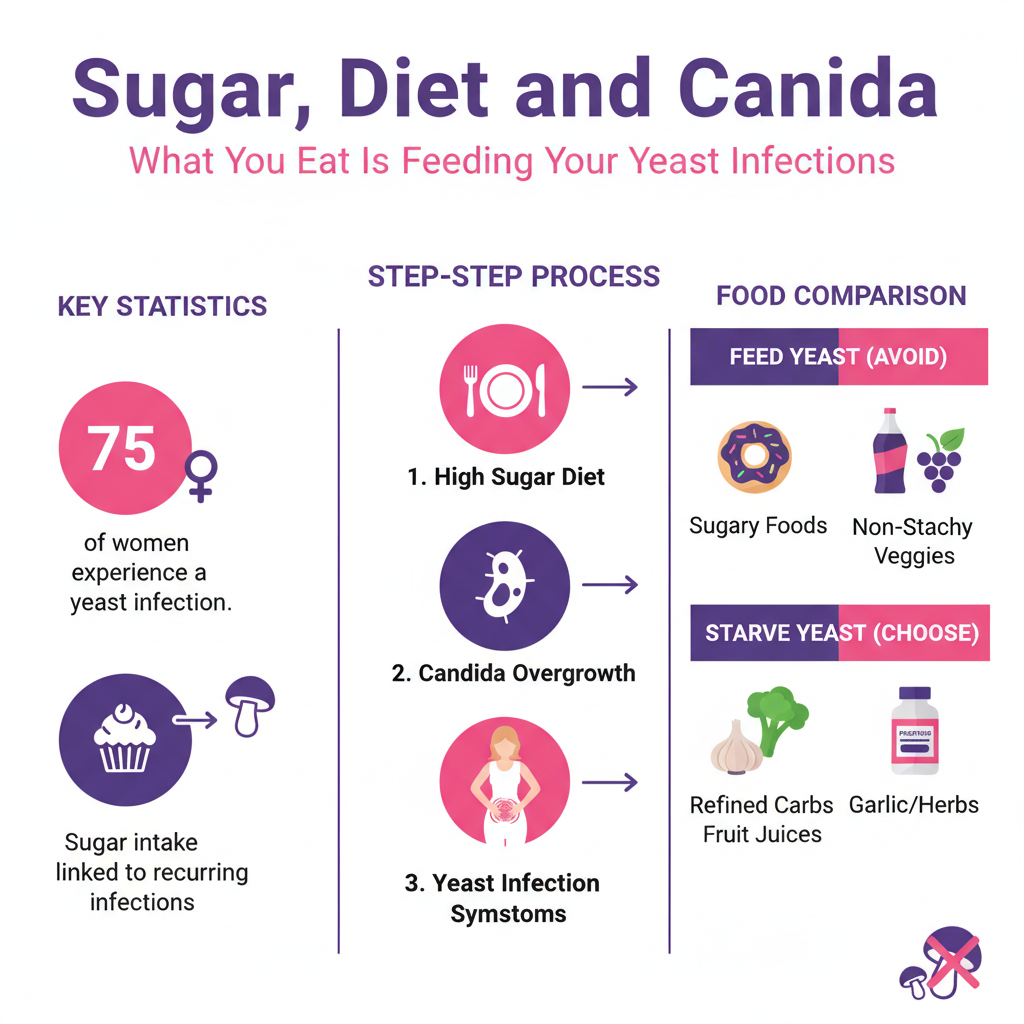
Candida is an opportunistic organism. It does not invade from outside — it waits, and when conditions shift in its favour, it proliferates. One of its primary fuel sources? Sugar. Simple carbohydrates and refined sugars create an environment in which Candida thrives, multiplying faster than your beneficial bacteria can keep up. This is the core of the diet yeast infection relationship: what you consume directly influences the microbial landscape of your gut and, by extension, your vaginal microbiome.
Dr. Chuma explains it this way: "Think of your gut as the headquarters and your vaginal microbiome as a satellite office. What happens at headquarters affects everything downstream. When Candida overgrows in the gut due to dietary triggers, it can translocate and contribute to recurrent vaginal infections. The two ecosystems are far more connected than most women realise."
This gut-vagina axis is not a fringe theory — it is increasingly supported by peer-reviewed research and forms the foundation of what is now known as the anti-candida diet approach.
The Science Behind Sugar, Diet, and Candida Overgrowth
The relationship between sugar and yeast infection is well-documented in clinical literature. Candida uses glucose as its primary carbon source for growth and biofilm formation. Biofilms are particularly problematic because they create a protective matrix around fungal colonies, making them more resistant to both antifungal medications and your body's immune response.
A landmark study published in the journal Virulence (2018) confirmed that high glucose concentrations significantly enhance Candida biofilm formation and virulence factors. This means that when you eat a high-sugar diet, you are not just feeding the yeast — you are making it stronger and harder to eliminate.
Additionally, research from the National Institutes of Health highlights that dietary patterns high in refined carbohydrates alter the gut microbiota in ways that reduce Lactobacillus populations. Since these bacteria are the primary defenders of vaginal health — producing hydrogen peroxide and bacteriocins that suppress pathogenic organisms — their reduction creates a cascade effect that elevates your risk of both bacterial vaginosis and vulvovaginal candidiasis.
Women with type 2 diabetes or insulin resistance are disproportionately affected. Elevated blood glucose levels provide a persistently rich environment for Candida, which is why recurrent yeast infections are a recognised complication of poorly managed diabetes. But you do not have to be diabetic to experience this effect. Even non-diabetic women consuming high-glycaemic diets show patterns of microbiome disruption that increase their susceptibility to food triggers for vaginal yeast overgrowth.
The NHS also acknowledges that certain health conditions and lifestyle factors — including diet — can increase the likelihood of recurrent thrush, underscoring the importance of looking beyond topical treatments to address root causes.
Signs and Symptoms: Is Your Diet Feeding Your Yeast Infection?
Before we talk solutions, let us make sure we are talking about the right problem. Yeast infections (vulvovaginal candidiasis) have a distinct symptom profile, though they are frequently confused with bacterial vaginosis. Here is what to look for:
- Intense vulvar itching — often the most distressing symptom, particularly at night
- Thick, white, cottage cheese-like discharge — typically odourless or mildly yeasty in scent
- Vaginal burning or soreness, especially during urination or intercourse
- Redness and swelling of the vulvar tissue
- Vaginal dryness or a raw sensation on the skin
- Recurring infections — defined as four or more episodes per year
Diet-related candida overgrowth often presents with some additional systemic signals that many women dismiss as unrelated:
- Persistent sugar cravings — Candida produces chemicals that stimulate cravings for its preferred fuel
- Bloating, gas, and digestive discomfort after meals rich in carbohydrates
- Brain fog or fatigue, particularly after eating
- Oral thrush or a white coating on the tongue
- Skin rashes or fungal infections in skin folds
If you are experiencing recurrent vaginal symptoms alongside these systemic signs, your diet and yeast infection connection may be more significant than you realised. We encourage you to take our BV or Yeast Quiz to help identify which type of infection you may be dealing with — because treatment matters and getting it right the first time is essential.
"Recurrent yeast infections are rarely just a vaginal problem. They are a whole-body signal that something in your internal environment has shifted. Diet is often the first and most powerful place to intervene."
— Dr. Chomba Chuma, MD, Founder of Femina™
The Femina Approach: Treating Yeast from the Inside Out
At Femina™, we have always believed that true vaginal wellness cannot be achieved with a single suppository or a short course of antifungal cream. Those approaches treat the symptom. Our approach targets the environment that allowed the symptom to develop in the first place.
This is why we developed the Femina COMBO Care — a complete dual-action bundle that addresses both the acute overgrowth and the underlying microbial imbalance simultaneously.
Femina COMBO Care — Complete Dual-Action Bundle
Struggling with recurrent yeast infections that keep coming back no matter what you try? The Femina COMBO Care bundle combines two powerful tools:
- Boric Acid Reset — Clinically supported boric acid suppositories that restore optimal vaginal pH and create an environment hostile to Candida and BV-causing bacteria
- 10-Strain Probiotic — A carefully formulated oral probiotic containing ten targeted strains, including multiple Lactobacillus species, designed to repopulate your gut and vaginal microbiome with protective, beneficial bacteria
Together, these two products work in tandem — the boric acid resets your vaginal environment while the probiotic rebuilds the ecosystem that keeps Candida in check long-term. This is not a short-term fix. This is a reset.
Shop Femina COMBO Care Now →Dr. Chuma notes: "Boric acid has decades of clinical evidence supporting its use for recurrent vulvovaginal candidiasis, particularly for non-albicans Candida species that do not respond well to standard azole antifungals. Paired with a targeted probiotic, you are addressing both the acute infection and the ecological conditions that allowed it to occur. Diet changes complete the triangle."
Want to understand your vaginal health more deeply before choosing a product? Start with our Femina VCheck assessment — a guided tool that helps you understand your current vaginal health status and what steps are most appropriate for your situation.
Step-by-Step Action Plan: Eating to Beat Candida
Implementing an anti-candida diet does not mean starving yourself or eating cardboard. It means making strategic, informed choices that shift your internal environment away from one that supports fungal overgrowth. Here is our practical protocol:
- Eliminate refined sugar for a minimum of 4 weeks. This includes white sugar, brown sugar, agave, honey, maple syrup, and artificial sweeteners that still trigger insulin spikes. Read labels carefully — sugar hides in sauces, condiments, yoghurts, and flavoured drinks. This single step has the most significant impact on reducing Candida's food supply.
- Reduce high-glycaemic carbohydrates. White bread, white rice, refined pasta, pastries, and processed cereals convert rapidly to glucose in the bloodstream. Replace them with low-GI alternatives: quinoa, brown rice, sweet potato in moderate portions, oats, and legumes. This does not mean zero carbohydrates — it means smarter carbohydrates.
-
Increase your intake of antifungal foods. Nature provides powerful anti-candida compounds in everyday foods. Incorporate the following daily:
- Raw garlic (allicin has documented antifungal properties)
- Coconut oil (contains caprylic acid, a natural Candida inhibitor)
- Apple cider vinegar (restores acidic gut environment)
- Ginger and turmeric (anti-inflammatory and antimicrobial)
- Leafy greens and non-starchy vegetables
- Prioritise fermented foods and probiotics. Kefir, unsweetened plain yoghurt with live cultures, sauerkraut, kimchi, and kombucha (low-sugar varieties) help repopulate your gut with beneficial bacteria. Pair your dietary efforts with the Femina COMBO Care 10-strain probiotic for a targeted, clinically curated approach that goes beyond what food alone can achieve.
- Hydrate strategically. Drink a minimum of 2 litres of water daily. Reduce or eliminate alcohol, particularly wine and beer, which are high in sugar and yeast content. Herbal teas — particularly pau d'arco, oregano, and peppermint — have mild antifungal properties and are a beneficial swap.
- Manage your protein and fat intake. Lean proteins (chicken, fish, eggs, legumes) and healthy fats (avocado, olive oil, nuts and seeds) do not feed Candida and help stabilise blood sugar. Stable blood sugar means less glucose available for fungal proliferation.
- Track your symptoms over 30 days. Keep a simple food and symptom diary. This is one of the most powerful tools available to you. Many women discover specific food triggers for vaginal yeast that are unique to their bodies — dairy, gluten, or certain fruits may be personal catalysts even if they are not universally problematic. Your Femina Education Hub has downloadable resources to support this process.
Lifestyle Factors That Make a Significant Difference
Diet is the foundation, but the anti-candida lifestyle extends beyond what is on your plate. Here are the non-negotiable lifestyle factors that Dr. Chuma recommends alongside dietary changes:
- Manage stress proactively. Cortisol — your primary stress hormone — suppresses immune function and disrupts gut microbiota. Chronic stress is a frequently overlooked driver of recurrent diet-related yeast infections. Prioritise sleep, introduce mindfulness practices, and protect your rest.
- Wear breathable underwear and clothing. Cotton underwear, loose-fitting bottoms, and avoiding tight synthetic fabrics reduce the warm, moist environment that Candida favours.
- Avoid unnecessary antibiotic use. Antibiotics indiscriminately eliminate beneficial bacteria, creating an open field for Candida to colonise. Always discuss the necessity of antibiotic prescriptions with your doctor.
- Do not douche. Internal vaginal cleansing disrupts the natural microbiome and pH. The vagina is self-cleaning. Femina always says: clean the outside gently, leave the inside alone.
- Support your immune system. Zinc, vitamin D, and vitamin C have documented roles in supporting immune defence against fungal overgrowth. Consider having your levels checked, particularly vitamin D, which is commonly deficient in South African women despite our sunny climate.
- Exercise regularly but hygienically. Physical activity supports immune function and metabolic health, but change out of sweaty workout clothes promptly and shower after exercise.
- Review your hormonal contraception. Oestrogen-dominant contraceptives can alter vaginal pH and glycogen levels, creating conditions that favour Candida. This does not mean stopping your contraception, but it is worth discussing with your healthcare provider if you are experiencing recurrent infections.
When to See a Doctor
We are strong advocates for self-education and proactive wellness at Femina. Our products, resources, and tools are designed to empower South African women to understand and care for their bodies. However, we are equally firm that there are times when a qualified healthcare provider is essential, and identifying those moments is part of responsible self-care.
Please consult a doctor or gynaecologist if:
- You are experiencing your first-ever yeast infection — self-diagnosis can be inaccurate and important conditions can be missed
- You have four or more yeast infections in a single year — this qualifies as recurrent vulvovaginal candidiasis and warrants investigation for underlying causes including diabetes, immunosuppression, or resistant Candida species
- Your symptoms do not improve within one week of treatment
- You are pregnant — antifungal choices and supplement protocols require medical guidance during pregnancy
- You have abnormal bleeding, pelvic pain, or fever alongside vaginal symptoms
- Your discharge has an unusual colour (grey, green, or yellow) or a strong, fishy odour — these suggest bacterial vaginosis or a sexually transmitted infection rather than a yeast infection
- You are immunocompromised due to HIV, chemotherapy, or long-term steroid use
Not sure whether what you are experiencing is BV or a yeast infection? Take our BV or Yeast Quiz for guided clarity, and then visit our Femina Insights Blog for more expert-written articles on vaginal health topics relevant to South African women's lives.
"Knowledge is the most powerful medicine we can offer. When a woman understands her body — truly understands it — she makes better decisions, asks better questions, and gets better outcomes."
— Dr. Chomba Chuma, MD
The Bottom Line: Your Fork Is Part of Your Treatment Plan
Recurrent yeast infections are not a personal failing, a hygiene issue, or bad luck. They are a signal — one that your body is sending consistently and clearly. The diet-yeast infection connection is real, clinically supported, and deeply relevant to the lived experience of countless South African women who are doing everything they have been told to do and still struggling.
At Femina™, our commitment is to give you the full picture. Not just the suppository. Not just the probiotic. The whole picture — because your vaginal health is an expression of your whole body's wellbeing, and it deserves whole-body solutions.
Start with your diet. Reduce the sugar. Nourish your microbiome with fermented foods and targeted probiotics. Reset your vaginal environment with clinically supported tools like the Femina COMBO Care bundle. And know that every step you take — no matter how small — is a step toward balance.
You can also explore more at our Femina Education Hub and visit our Femina Insights Blog for ongoing expert guidance on gut health, vaginal wellness, and living well as a South African woman.
Featured Product
Femina COMBO Care
Recommended based on this article — shop exclusively on Velobiotics.com
🛒 Shop Femina COMBO CareView all Femina™ products →